Super Mutt
A caped, superhero dog battles his way across a city skyline, with a soundtrack that borrows shamelessly from Rossini.
Manic Miner, Matthew Smith’s 1983 masterpiece, embodies the very essence of the ZX Spectrum: a 48KB programming marvel that defined the British platformer and revolutionized microcomputer gaming.
You play as Miner Willy, navigating 20 distinct caverns, each contained within a single screen. The objective is simple: collect all the flashing keys in the room before your oxygen supply runs out, then dash for the exit. However, execution demands surgical precision. Jump trajectories are fixed, requiring perfect timing to avoid environmental hazards, collapsing platforms, and surreal enemies—ranging from walking toilets to oysters with fearsome jaws.
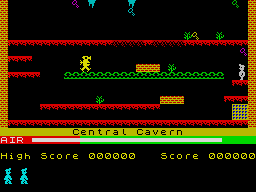
Given the Spectrum’s modest hardware capabilities, Manic Miner was a technical revelation:
Although considered unforgiving by modern standards, Manic Miner remains an absolute triumph of game design. It successfully combined formidable difficulty with addictive gameplay that compelled players to have “just one more go,” thereby setting the benchmark for the platformers that followed.
Nothing is hosted on this site — the links go to the external sites credited above. See the Downloads page for more archives and emulators.
A caped, superhero dog battles his way across a city skyline, with a soundtrack that borrows shamelessly from Rossini.
Dan lands his airship on Dr. Blitzen's hideout to steal the plans for a Death Ray — eight sticks of dynamite, a lot of falling, and Mozart's Rondo Alla Turca standing in for a soundtrack.
An egg with boxing gloves washes up on a cursed island — the game that turned Dizzy into British budget software's best-loved mascot, and arguably the best entry in his own series.