Super Mutt
A caped, superhero dog battles his way across a city skyline, with a soundtrack that borrows shamelessly from Rossini.
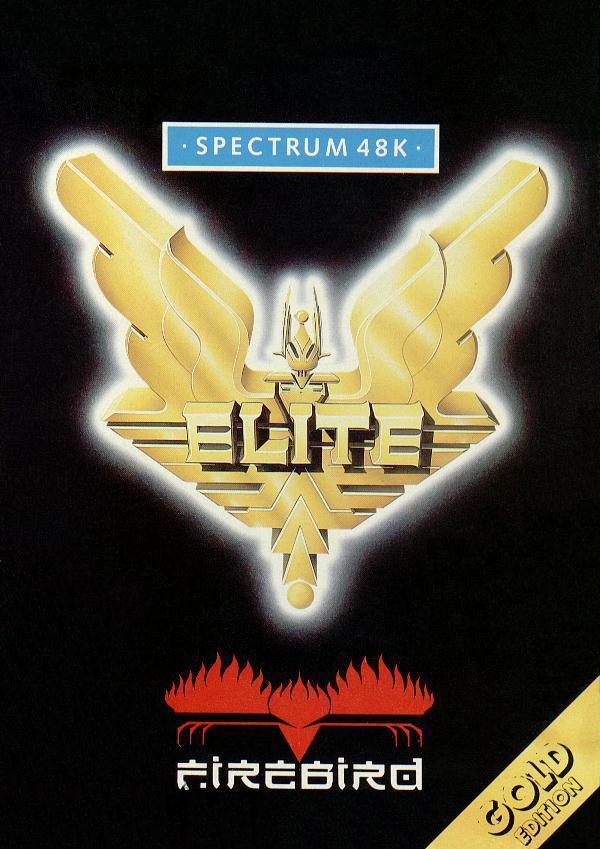
Originally built for the BBC Micro by two Cambridge students, David Braben and Ian Bell, Elite arrived on the Spectrum in 1985 and brought with it a genre that arguably didn't exist before it: the open-ended space trading sim. Eight galaxies, thousands of star systems, and a real economy to exploit — on a machine with 48 kilobytes of memory.
You start with a basic Cobra Mk III and a handful of credits. Everything else — better weapons, cargo capacity, a docking computer, a reputation that climbs from Harmless to the coveted rank of Elite — is earned through trading, bounty hunting, or a bit of judicious piracy. There's no scripted campaign forcing your hand; the galaxy is simply there, and what you do with it is up to you.
The real marvel is procedural generation: the entire galaxy's worth of star systems, planet names, economies and politics is derived algorithmically from a compact seed, rather than stored outright — there was simply no room to store it any other way. Combine that with real-time filled/wireframe 3D ship rendering on a Z80, and you have one of the most technically ambitious pieces of software the platform ever ran.
The frame rate is modest and keyboard-only flight control takes practice, but none of that dulls the astonishment of what's actually happening under the hood. Elite didn't just push the Spectrum; it helped invent the open-world genre outright.
Nothing is hosted on this site — the links go to the external sites credited above. See the Downloads page for more archives and emulators.
A caped, superhero dog battles his way across a city skyline, with a soundtrack that borrows shamelessly from Rossini.
Dan lands his airship on Dr. Blitzen's hideout to steal the plans for a Death Ray — eight sticks of dynamite, a lot of falling, and Mozart's Rondo Alla Turca standing in for a soundtrack.
An egg with boxing gloves washes up on a cursed island — the game that turned Dizzy into British budget software's best-loved mascot, and arguably the best entry in his own series.