Super Mutt
A caped, superhero dog battles his way across a city skyline, with a soundtrack that borrows shamelessly from Rossini.
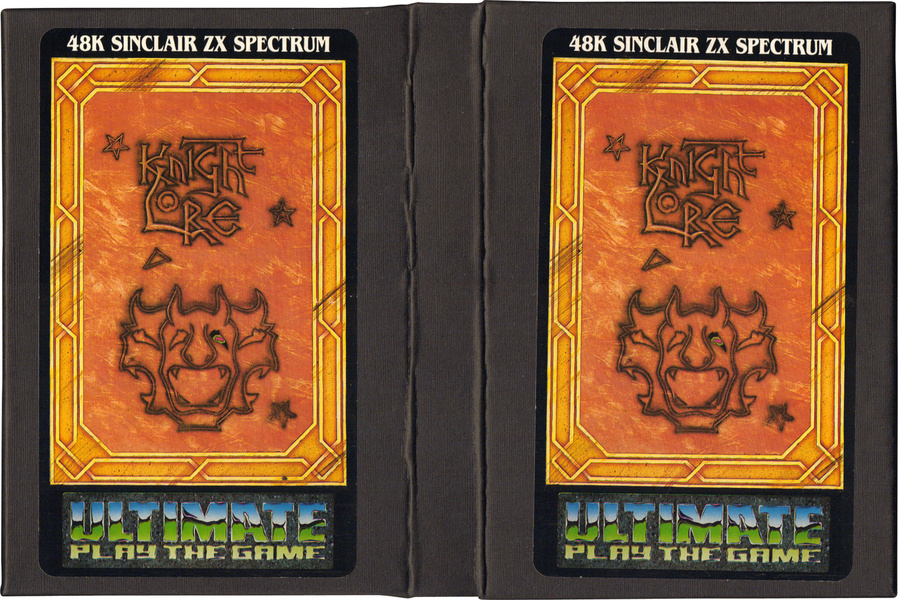
It is hard to overstate what Knight Lore did to the ZX Spectrum in 1984. Ultimate Play the Game's isometric "Filmation" engine — solid-looking 3D rooms built from a handful of block shapes, viewed from a fixed high angle — didn't just look like nothing else on the machine. It kicked off an entire genre of imitators that lasted the rest of the decade.
Sabreman, cursed with lycanthropy, has forty in-game days to gather the ingredients for a cure before the transformation becomes permanent. By day he explores Melkhior's castle as a man; by night he turns into a werewolf, changing which obstacles he can pass and which puzzles he can solve. Progress means understanding the castle's room-by-room logic: block puzzles, pressure pads, and hazards that punish careless jumps.
The Filmation engine's trick was treating every room as a set of solid isometric blocks that sprites could convincingly stand on, behind, or in front of — full pseudo-3D depth sorting on a 48K machine with a 3.5MHz processor. It's the single most influential piece of Spectrum software engineering of its era, and its DNA is visible in dozens of games that followed, including this site's own review of Atic Atac from the same studio.
The controls feel stiff by modern standards — movement is locked to the isometric grid and turning takes a beat to get used to — but the puzzle design and sheer technical audacity still land. This is a game to play for what it made possible as much as for itself.
Nothing is hosted on this site — the links go to the external sites credited above. See the Downloads page for more archives and emulators.
A caped, superhero dog battles his way across a city skyline, with a soundtrack that borrows shamelessly from Rossini.
Dan lands his airship on Dr. Blitzen's hideout to steal the plans for a Death Ray — eight sticks of dynamite, a lot of falling, and Mozart's Rondo Alla Turca standing in for a soundtrack.
An egg with boxing gloves washes up on a cursed island — the game that turned Dizzy into British budget software's best-loved mascot, and arguably the best entry in his own series.